In clinical practice, the same patterns show up again and again. Patients doing many things correctly, but making one or two consistent mistakes that undo a significant amount of their effort. In the UAE, several of these mistakes are climate-specific - driven by assumptions that work in other parts of the world but do not translate well to 40-degree heat, intense UV exposure, and the daily shift between outdoor heat and air-conditioned interiors.
Here are the five I see most often.
1. Treating Sunscreen as a Summer Product
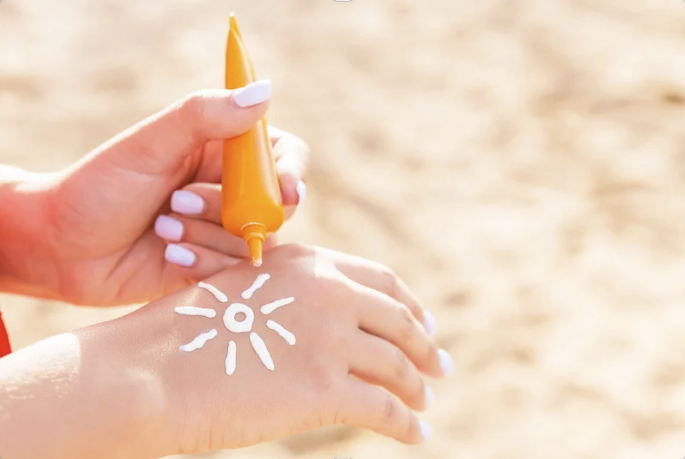
This is the most common and the most consequential mistake. Patients reduce or stop using sunscreen in winter because temperatures drop and the sun feels less intense. But UV radiation does not behave like temperature. UVA rays - the ones responsible for photoaging and a significant portion of skin cancer risk - remain consistent year-round in the UAE, regardless of whether it feels hot outside.
UVB rays, which cause burning and are more seasonally variable, are also still present at meaningful levels throughout the year in this region given our latitude.
The standard recommendation: SPF 50 broad-spectrum sunscreen, applied every morning, every day of the year. Not just beach days. Not just summer. Every day.
A useful way to check: UAE UV index data is publicly available and is rarely below 3, even in December. An index of 3 and above is sufficient to cause cumulative skin damage with unprotected exposure.
2. Over-Exfoliating in Response to Heat and Sweat
When skin feels oily, congested, or dull in hot weather, the instinct is to scrub more. More exfoliation, more acids, more stripping. This backfires.
Exfoliation disrupts the skin barrier - the outermost layer of skin that keeps moisture in and irritants out. In a hot, high-UV environment, a compromised skin barrier means skin that is more sensitive to sun damage, more prone to post-inflammatory pigmentation after any irritation, and more vulnerable to environmental stressors.
The right response to congested summer skin is usually lighter products, more hydration, and less active treatment - not more. Over-exfoliated skin in the UAE summer will often show up as persistent redness, increased pigmentation, or a tight, sensitized feeling that does not resolve with moisturizer.
Exfoliate thoughtfully. Two to three times a week with a mild chemical exfoliant is a reasonable ceiling for most skin types in this climate. More is not better.
3. Skipping Moisturizer on Oily or Acne-Prone Skin
This one persists despite a large body of evidence to the contrary. The belief: if your skin is already oily or breaking out, adding moisture will make it worse.
The reality: dehydration and oiliness are different things. You can have dehydrated skin that also produces excess oil - and the excess oil is sometimes a direct response to dehydration. When the skin is stripped of moisture (by hot weather, air conditioning, harsh cleansers, or over-exfoliation), sebaceous glands can compensate by producing more sebum.
A lightweight, non-comedogenic moisturizer is appropriate for acne-prone and oily skin types. It supports barrier function, reduces reactivity, and can actually help regulate sebum production over time. The goal is hydration without occlusion.
4. Using Products Designed for a Different Climate
Most global skincare brands formulate for European or North American climates - mild temperatures, lower UV levels, less year-round humidity variation. Many of these products are too rich for UAE conditions in summer, or contain fragrance and active concentrations that are fine in gentler climates but become irritating when skin is already heat-stressed.
The opposite issue arises in the colder, more arid winter months when skin can become genuinely dry - and patients stick with their lightweight summer routine that no longer provides adequate barrier support.
A seasonal skincare audit is worth doing: lighter, simpler, more protective in summer. Richer, more restorative in winter. A dermatologist consultation can help you build a routine that actually fits your climate and skin type.
5. Treating Air Conditioning as a Neutral Factor
Most patients in the UAE spend the majority of their indoor time in heavily air-conditioned spaces. Air conditioning dramatically reduces ambient humidity, which draws moisture from the skin surface. Over hours of daily exposure, this contributes to chronic skin dehydration - even in patients who drink adequate water and use moisturizer.
Signs that air conditioning is affecting your skin: a persistent tight or dry feeling indoors despite having moisturized, fine lines that seem more pronounced by the afternoon, or increased sensitivity and redness without a clear topical cause.
A small desktop humidifier, particularly in home or office environments where you spend long stretches of time, can make a meaningful difference. So can switching to a slightly more occlusive moisturizer for indoor use compared to your outdoor morning routine.
A Note on Getting the Basics Right
None of this is complicated. But skincare advice online tends to focus on the exciting end of the spectrum: new ingredients, trending treatments, dramatic transformations. The fundamentals - daily SPF, appropriate hydration, a climate-matched routine, and not overdoing active treatments - deliver better results for most people than any amount of product experimentation.
If you are unsure whether your current routine is working well for your skin type and environment, a consultation can help clarify what is actually needed and what can be simplified.